Tuesday, April 13, 2010

Change: Sometime a battle between short term rewards and long term goals

Self improving team plays a significant role in small business setup where a team has to continuously invest in thinking how the current processes and system can be made efficient and faster. This type of team become a catalyst for "change" in an organization.

The concept of "Self improving Team" sounds very elegant but there some hidden challenges involved in it. One of the major challenge is battle in brain between short term rewards and long term goals.

Short term reward says use tactical solution and achieve the milestone with in targeted time and long term goal says invest some more (often one time effort) to achieve efficiency in performing a task (by automation, documentation, finding better algorithm etc) so that next time same task can be performed in more faster and efficient way. It is tragic story that most teams choose short term reward in time crunching situations.

I suggest, two strategies to tackle this:
  1. Create a dedicated role of self improvement and assign to appropriate team with right set of skills.
  2. Have a self improving culture in place. The team should have brilliant guys. The leader has to play a role of catalyst.

Saturday, April 10, 2010

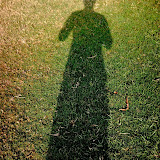
Shadows: Pictures of the Week 12 April 2010

Today I am posting pictures with the theme "Shadows". By title, it may be tempting to think that this post is about some dark art or something but it is not. I never really thought about shadows until I started photography.

Shadows makes a very interesting subject to study because they come in infinite shapes and sizes, they are always black in color, they are found everywhere (do not believe me, just look around) and every one of us has (beautiful) shadow. Shadows live in their world, without interfering with ours. We simply ignore them 99% of the time.

Album:

Shadows have also been studied in relation with different fields. Interested readers might like to view them.


Saturday, April 3, 2010

Decentralization:The power of many: Honey Bees : Foraging

This post explore "Food Foraging Problem" faced by honey bees. Honey Bees covers around 14 km of area around their colony to search for honey. There are around 45k bees average in a colony, where subsection of them goes for discovery of food and foraging. To make one pound of honey, workers in a hive fly 55,000 miles and tap two million flowers! To tap millions of flower, located randomly within the region, it is waste of energy of all the bees start searching food. To conserve energy, only few called scout bees search for location of food and pass the location to other fees. Well this is amazing form of efficiency with no single coordinator.

I will try to dive deep into this problem. I will divide the foraging problem into two parts, environment specific and honey bees specific.

Environment Specific: Environment consists of an avg. area of 14km around the beehive. Honey is found as nectar in flowers and flowers have limited lifespan and source of nectar. Environment has other competitors and hostile conditions (with urbanization in place).

So everything boils down "being at the right place, at the right time and having good luck"

Honey Bees Specific:
  1. How do they distribute themselves the searching area? Do they search randomly or they follow some pattern? Remember if everyone starts searching food, there will be repetitions and bees will consume more energy on the other hand too few bees wont be able to search effectively.
  2. What is their visibility area while flying?
  3. How do they estimate quality and quantity of honey discovered?
  4. How do they remember the path back to their colony once honey is discovered?
  5. How do they communicate quality, quantity and location of honey source discovered to other worker bees in the colony?
I googled to find answers of the above questions and got some amazing facts demonstrating the how amazing these small creatures are.
  1. The worker bees divide the labor depending upon their age. More aged and experienced bees perform foraging. Other worker bees perform other labour work in the beehive like nursing, cleansing, architecting etc.
  2. Honey bees lack stereo vision as we have so they see the world in a different way as we do. They can distinguish high contrast shapes and patterns. They can use ultra violet and polarized light from sun to sense the direction from honey source to beehive. They demonstrate associative learning, color / odour learning and top down processing of information while foraging i.e. they can remember landmarks, colors and odour to come to same food source over many times a day.
  3. Frankly, I faced a hard time to find some reliable sources to find the answer. I have found none. In this case, I will do some guesswork. I believe that bees can remember quantity of food using visual memory, odour and taste.
  4. Bees use a couple of techniques to keep track of distance, sun as compass, Sun Polarized Light (in cloudy conditions), Earth Magnetic Fields and distance measurement techniques involving optical flows. All these techniques are redundant and specific technique is used depending upon environmental conditions. (see here)
  5. To communicate quality, quantity and location of honey source, bees do a ‘waggle dance’ that lets other bees know exactly where they have been, quality and quantity of source. You could put a point in a map about where they have gone based on the information that’s in the dance.
Honey Bees demonstrate one of the efficient form of decentralization and its principles are hard coded in their DNA.

Related Posts

References:

Friday, April 2, 2010

Break Free: Pictures of the week: 3 April 2010

World is full of misery because many times we have common mental models and patterns as the things should be. We want to remain in our comfort zones. We want us to be called "normals".

The theme of this week is "Break Free". This week pictures may not shows any pattern that clicks our minds. I clicked them at most unexpected place, I can imagine.

Let us come out of our daily routines.
Let us love things as they are.
Let us not always remain "normals"
Let us do something different.
Let us break free.


Wednesday, March 31, 2010

Decentralization: The power of many: Introduction

Decentralization is the buzz word in todays world. There are striking examples of decentralized management and organizations all around. Some of the examples are wikipedia, Youtube, Open Source Communities, Blogosphere and many more.
In my view, decentralization is kind of organization of individuals (I will call them owners) where each owner obey following basic meta rules:
  1. They have common values and vision.
  2. They strive toward common goals.
  3. They are the owner of their own roles and tasks.
  4. They are driven by Passion and Choice

Similarly decentralization can be defined on collection of other decentralized teams where each team follow above basic meta rules.

Please note that
  1. Decentralization is not alternative to leadership. In book, The Starfish and the Spider, the author has defined new role of leader in decentralization called catalyst.
  2. Vision and Values are subjective to change with coarse of time. But once they are updated, every one follow them.
  3. Central Authority is replaced by a role, called temporary leader/coordinator. For a particular goal, they provides direction to others.
  4. Strengths of the individuals still play a important role in decentralization. Infact owners choose their goal and role based upon their strengths, passion and skill set.
Let us understand, decentralization with example of flocking of birds.

According to wiki, "flocking" of birds is the collective motion of a large number of birds from simple rules that are followed by individuals and does not involve any central coordination.


Probably everyone knows, flock of birds covers thousands of miles every year. But do you know, they do it by just obeying following three simple rules by all individuals:
  1. Separation - avoid crowding neighbors (short range repulsion)
  2. Alignment - steer towards average heading of neighbors (direction alignment)
  3. Cohesion - steer towards average position of neighbors (long range attraction)
Its truly amazing how these small and delicate creatures travel such a large distance. Artic tern birds travel about 22,000 miles in a round trip. It breeds in the summer months in the Artic, then flies to the Antartic to feed during the summer months there.


In this post, I have not tried to define decentralization as a whole but provided some food of thoughts to the reader. Decentralization is nothing new as the whole nature is filled with examples, ant colonies, bee colonies, flocking etc. I would be exploring this topic further in next of my posts.

References:

Friday, March 19, 2010

Best from the Week

From this week, I am starting to post best pictures of the week, socked up in a theme. This week theme is 'Sunset'.

The pictures attached here are taken from a place, a government fish farm, near to my office. This week,I got a chance to get inside it and spend a lovely evening. So here it goes (Visit the whole album from here)...


Sunday, March 7, 2010

Reinventing by packaging

Many times packaging in different way makes wonders and attracts consumers and make them to pay money. Yesterday I visited one restaurant, Rajdhani Mani Square Kolkata. The theme of the restaurant is based upon Rajasthani way of presenting food and the food was normal as you can find in any typical Indian house (gujrati/normal) dal, roti, halwa etc. Also I found the taste similar to food cooked by my Mother.


So what works for this restaurant. I think there are following things:


1. Place: located at a mall besides other expensive restaurants.
2. Theme: Rajasthani theme (a royal one)
3. Packaging and Presentation
4. Good and Fast Service: good response time.


Some Rearranging and associating with different themes make wonders !!!